


How Often Should You Wash Your Hair?
Written by URoots Editorial Team | Medically reviewed by Dr. Ajay, MBBS, QHT Clinic
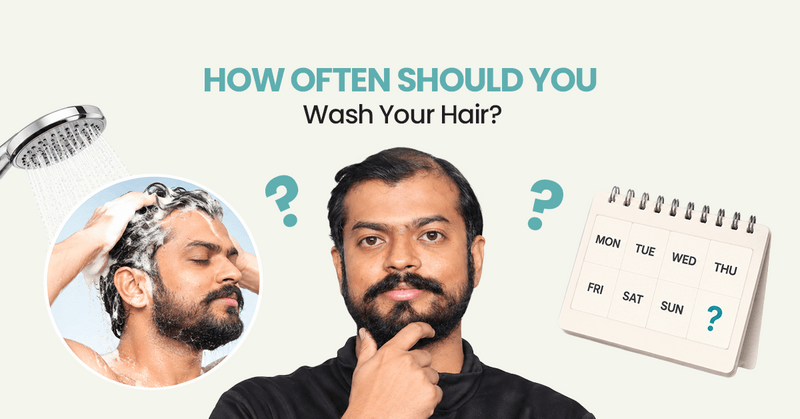
Your parting looks oily by evening. Two days later, the ends feel like straw. Somewhere between those two feelings sits the question almost everyone asks a hair doctor: how often should you wash your hair without making the hair fall worse?
There is no single number. For most people the right routine lands between daily and twice a week, and where you fall depends on your hair type, how oily your scalp gets, and how much you sweat.
Oily, fine hair needs washing more. Dry and curly hair needs it far less. This guide shows you where you fit, and it settles the worry underneath most of these questions: whether washing is behind your hair loss.
The thing our doctors get asked week after week is whether washing too often is quietly thinning the hair. It is not. We will come to why.
Hair Washing Frequency By Hair Type
Two friends can stand at the same sink and need completely different routines. One has fine, oily hair that looks flat by lunch. The other has thick curls that stay dry for a week. Your hair type decides more about washing than any rule you were handed as a teenager.
Here is the quick map, then the detail.
| Hair type or scalp | How often to wash | Why |
|---|---|---|
| Oily scalp, fine or straight hair | Daily or every other day | Oil reaches the surface fast on fine, straight hair and on an oily scalp |
| Normal or wavy hair | Every 2 to 3 days | Enough to clear oil and sweat without stripping the hair |
| Dry, brittle or coloured hair | 1 to 2 times a week | Dry and treated hair holds little oil, so frequent washing leaves it coarse |
| Curly or coily hair | Once a week to once every 2 weeks | Oil struggles to travel down the bend of a curl, so this hair runs driest |
| Flaky, itchy or dandruff-prone scalp | A gentle or medicated shampoo, as directed | Regular washing clears the oil and dead skin that feed the flaking |
Oily scalp and fine hair
If your scalp feels slick by afternoon, your hair is telling you something. Fine, straight hair lets oil reach the surface quickly, and an oily scalp adds to it. Washing your hair daily or every other day is reasonable here, and it will not damage fine hair the way the internet claims.
What matters more is what you wash with. A harsh shampoo punishes a scalp you clean often, and an oily scalp that tips into flaking needs calming, not stripping. A medicated ketoconazole shampoo like URoots Knix KZ Ketoconazole Shampoo is built for that, used as directed on the label and under your doctor's guidance. The scalps our doctors point toward it are the frequent washers whose oiliness had turned into flaking and itch.
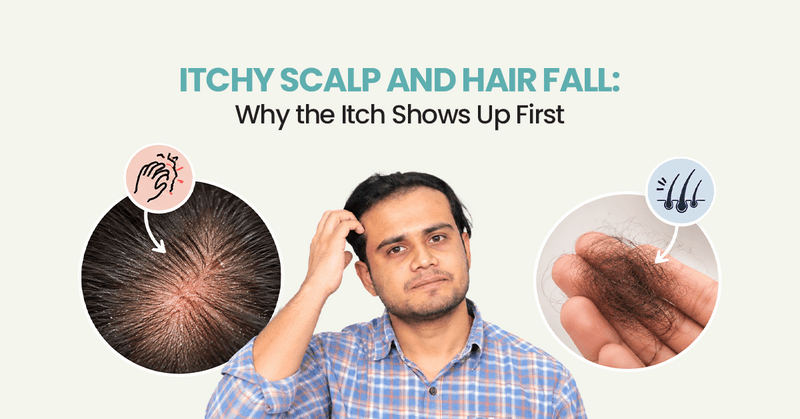
If you have noticed more hair fall alongside a greasy, itchy scalp, read how an oily scalp and hair fall are connected.
Washing dry and brittle hair
Dry hair has the opposite problem, and the opposite schedule. Brittle, coloured or chemically treated hair holds very little of its own oil, so washing it too often leaves it coarse, frizzy and prone to breakage and split ends. One to two washes a week is plenty.
When you do wash, work the shampoo into the scalp and let the lather rinse through the lengths, rather than scrubbing the ends. A hydrating, sulphate-mild cleanse suits this hair. URoots Daily Hydrating Shampoo is an aloe-based everyday option that cleans the scalp without drying out the lengths.
Washing curly, wavy, and coily hair
Curls change the maths entirely. Oil has to travel down the bend of each strand to reach the ends, and on curly and coily hair it rarely makes it, so the lengths stay dry. Wavy hair sits closer to normal and handles a wash every 2 to 3 days. Curly and coily hair does best washed once a week, or as little as once every two weeks. Between washes, a conditioner keeps the lengths soft without a full shampoo.
Match the wash to the scalp, not to the calendar.
Daily Hair Wash: Good or Bad?
Daily washing is not the villain it is made out to be. For a genuinely oily scalp, for heavy sweating, or for someone at the gym every day, washing your hair daily is a sensible routine.
The trouble starts when that advice gets applied to every head. On dry, curly or coloured hair, a daily shampoo strips the cuticle of its natural moisture and leaves the hair dry and frizzy. So is daily hair wash bad? Only for the wrong hair type.
There is a simple test for whether you have the frequency right. If your hair feels soft and lubricated, but not oily, by the middle of the day, you are washing it the right amount. If it feels dry and coarse, scale back.
What Actually Changes How Often You Need To Wash
Your routine is not fixed for life. It shifts with your scalp, your workouts and your age.
Your scalp and your hair's own oil
The oil your scalp makes is not the enemy. It maintains the structure of each strand, and it needs time to travel from the scalp down to the ends to keep them soft. Wash it all away too often and the ends are the first to suffer.
Sweat, workouts and helmets
A heavy workout changes the picture for a day. So does a helmet or a cap worn for hours. Sweat and trapped heat leave the scalp needing a wash sooner than your usual schedule, so a wash after the gym or after a long ride makes sense. That is different from deciding every head needs a daily shampoo, because daily exercise on its own does not demand one. What decides it is whether your scalp and hair actually need cleaning.
Oiling before a wash
Oiling is part of the routine in most Indian homes, and there is no reason to drop it. A pre-wash oil, massaged in an hour or so before you shampoo, softens the hair and makes the wash gentler on dry lengths. Treat it as a comfort and conditioning step, not a treatment for hair fall. URoots Pure Scalp Nourishing Oil with bhringraj and amla, is a light, non-greasy choice for this pre-wash ritual. If you are oiling in the hope of holding onto hair, read whether oiling stops hair fall before you count on it.
Age and oil production
Oil glands answer to hormones, which is why younger scalps run oilier and need washing more. As you get older, the scalp makes less oil, and you can stretch the gap between washes without the hair looking greasy.
Hair Washing For Dandruff and Itchy Scalp
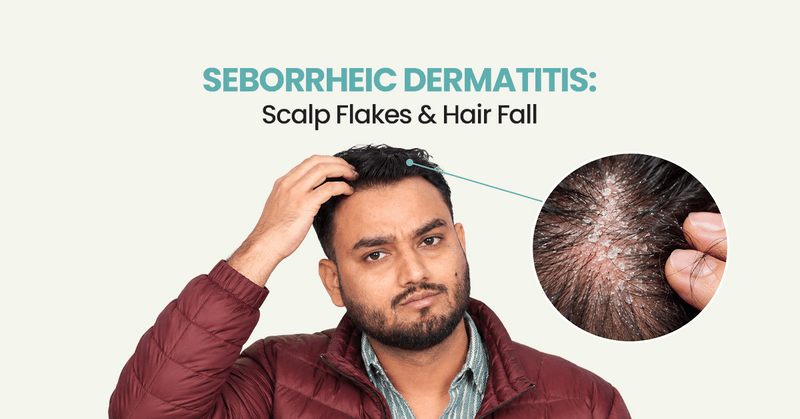
You notice the flakes on a dark shirt before anything else. Dandruff is usually a symptom of a skin condition called seborrheic dermatitis, which leaves the scalp flaky, itchy and sometimes red.
Here, washing matters more, not less. Skip washes and dead skin and oil build up on the scalp, and that build-up makes the dandruff and the itch worse. Regular washing with a gentle or medicated shampoo clears it. A dandruff shampoo controls most cases on its own. If yours does not settle, a doctor can prescribe a stronger shampoo or cream.
URoots carries medicated options for this. Xtend KZ Scalp Clarifying Shampoo is the everyday choice for flaking, and the stronger Knix KZ Medicated Shampoo is for persistent, inflamed scalps, used under your doctor's guidance. Use any medicated shampoo as directed on the label.
A calm, clean scalp holds hair better than an irritated one.
Does Washing Your Hair Cause Hair Fall?
You wash, the drain fills with hair, and the shampoo gets the blame. It almost never deserves it.
The average person loses about 100 hairs a day. On the days between washes, those loose hairs stay caught in the rest of your hair. One wash releases two or three days' worth at once, so a single shower looks alarming when it is really normal shedding arriving together. Washing does not interfere with your hair growth. Skipping washes saves nothing, and it leaves the scalp worse.
So when is the hair fall real? When you are shedding far more than usual for weeks on end. That heavier shedding has triggers: major stress, a high fever or serious illness, surgery, a sharp drop in weight or a sudden change in diet, low iron, a thyroid problem, or the hormonal shifts that follow childbirth or arrive around menopause.
This pattern, where far more hairs than normal enter the resting phase and fall, shows up two to four months after the trigger and settles within six months, and the hairs that fell are replaced by new ones.
Bottom line: washing does not cause hair fall. If your shedding looks heavier than normal, or it does not settle, find out why rather than washing less.
How To Wash Your Hair The Right Way
Most people lose points in the same three places. Fix these and the wash does its job.
Start with the water. Cool or lukewarm is best, because water that runs too hot dries the hair, roughens it and causes damage over time. Put the shampoo where the oil and sweat actually sit, which is the scalp, and let it rinse through the lengths rather than lathering the ends directly.
Keep conditioner to the mid-lengths and ends, and off the scalp, especially if your scalp runs oily. Rinse well. Then blot the hair with a towel instead of rubbing it, because rubbing roughens wet strands and invites breakage.
Small changes, but they decide whether a wash leaves your hair soft or straw-like.
Not sure whether your hair fall is normal shedding or something more? Take the 2-minute URoots hair test for a doctor-backed read on where your hair actually stands.
Frequently Asked Questions
How many times should you wash your hair in a week?
It depends on your hair type. How many times we should wash hair in a week ranges from daily for an oily, fine-haired scalp, to every 2 to 3 days for normal hair, down to once or twice a week for dry or curly hair.
Is it bad to wash your hair every day?
Not for an oily scalp or for someone who sweats heavily. For dry, curly or coloured hair, a daily shampoo strips moisture and leaves it frizzy, so those hair types do better with fewer washes.
Does washing hair daily cause hair loss?
No. Washing does not interfere with hair growth. The hair you see on wash day is normal shedding that had collected between washes, not hair the shampoo pulled out.
How often should I wash oily hair when I sweat a lot?
Sweat leaves an oily scalp needing a clean sooner. On high-sweat days you can wash an oily scalp daily, as long as you use a gentle shampoo that will not dry it out.
Should I wash my hair every day after a workout or gym?
Sweat and headwear can leave the scalp ready for a wash, so a wash or a mild cleanse after a session is fine. It does not mean every hair type needs a full daily shampoo.
How often should I use an anti-dandruff shampoo?
Use it as directed on the label. A dandruff shampoo controls most flaking, but it is not meant to replace your everyday shampoo, and a scalp that does not settle needs a doctor's review.
References
- Medical News Today. How often should you wash your hair? [Internet]. Brighton (UK): Healthline Media UK; 2021 Sep 24 [cited 2026 Oct 6].
- Cleveland Clinic. The dirty truth about washing your hair [Internet]. Cleveland (OH): Cleveland Clinic; 2025 Apr 29 [cited 2026 Oct 6].
- Healthline. How often should you wash your hair? [Internet]. San Francisco (CA): Healthline Media; 2019 Nov 7 [cited 2026 Oct 6].
- Mayo Clinic News Network. Mayo Clinic Minute: How often should you wash your hair? [Internet]. Rochester (MN): Mayo Foundation for Medical Education and Research; 2024 Apr 9 [cited 2026 Oct 6].
- MedlinePlus. Dandruff, cradle cap, and other scalp conditions [Internet]. Bethesda (MD): National Library of Medicine (US); updated 2025 Mar 1 [cited 2026 Oct 6].
- Harvard Health Publishing. Telogen effluvium [Internet]. Boston (MA): Harvard Medical School; 2024 Oct 7 [cited 2026 Oct 6].
Know Your Hair Fall Before It Worsens
Identify early hairfall signs with personalised expert-backed recovery guidance.
 Take 2 minutes
hair test. (opens in a new tab)