


Scalp Psoriasis and Hair Loss: What's Happening and What to Do
Written by URoots Editorial Team | Medically reviewed by Dr. Ajay, MBBS, QHT Clinic
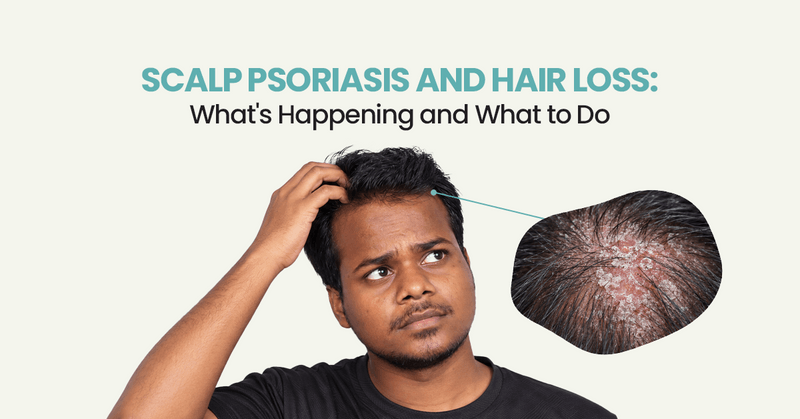
You spot silvery flakes near your parting. A few days later there are more strands than usual on the pillow, in the comb, circling the drain. The worry lands fast, and it is always the same question: is the hair going for good?
Here is the honest answer, up front. Scalp psoriasis and hair loss often travel together, but psoriasis does not kill the hair root.
The hair fall comes from what happens around the root: inflammation, itching, and dry scales you feel tempted to pick off.
Calm the flare, and the hair usually comes back. Below, we walk through why the shedding starts, how to tell psoriasis apart from a greasy, dandruff-type scalp, and how to protect your hair without making the flare worse.
What Psoriasis On Scalp is Actually Doing Up There
Run a fingertip over the patch. It feels raised, rough, dry. Not slippery, not oily. That texture is your first clue.
Your skin is always making new cells deep down and pushing them up to the surface. Normally that trip takes about a month. In psoriasis, the immune system speeds it up, so cells reach the top in days and pile on top of each other. The pile-up shows as thick, red patches capped with silvery scales. Doctors call these patches plaques. On the head, they settle on the top of the scalp, the hairline, behind the ears and down the back of the neck.
Psoriasis flares and settles across a lifetime, and it runs in families. Dry skin, infections, certain medicines and stress can each set off a fresh flare. It is a long-term condition worldwide, with at least 100 million people living with it. There is no switch that turns it off for good. It is brought under control and kept there.
One detail to hold onto: these scales are dry and thick. That is very different from the greasy flaking of an oily scalp, and that difference decides a lot later. In our hair consultations, the people who turn out to have scalp psoriasis often arrive certain it is stubborn dandruff that no shampoo has fixed.
Scalp Psoriasis Hair Loss Causes: Why The Scaly Patches Lead To Hair Fall
The hair root is usually fine. The trouble sits in the skin around it, and it stacks up in a few ways.
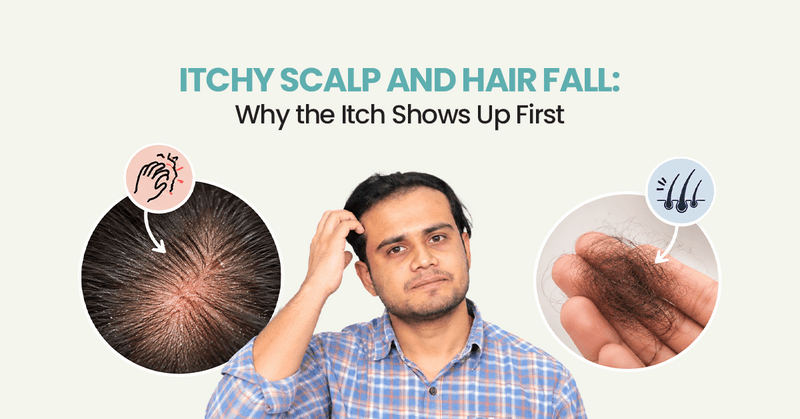
Start with inflammation. When the scalp stays inflamed, the follicles turn weak and brittle, and some hair loosens on its own. Then comes the itch, which can be fierce and sometimes sore. Scratch or rub hard, and you snap strands mid-length.
Picking is the bigger culprit. Force a dry scale off the scalp and attached hairs come away with it. Rough handling adds to it too, because scrubbing and harsh drying leave the scalp parched and the hair more fragile. Underneath all of this sits stress, which triggers flares and feeds the shedding at the same time.
Notice what none of that involves: permanent damage to the root. The harm is happening around the hair, and scaly-patch hair fall is reversible for the same reason.
Is Scalp Psoriasis Hair Loss Permanent?
Treat the flare, and in most cases the hair grows back. That is the headline, and it holds for the large majority of people whose scalp psoriasis leads to shedding.
There is one honest exception. Hair may not return if severe scalp psoriasis is left untreated for a long stretch, or if constant scratching breaks the skin into sores that bleed, because that kind of damage can scar the scalp.
Scarred skin does not grow hair the way healthy skin does. This is precisely why acting early matters more than any single product does.
Once the scalp has settled, gentle steps can support the hair as it recovers. A minoxidil-free serum built around peptides works as a light daily care step (URoots Hair Growth Serum).
If the shedding was the diffuse, all-over kind rather than a single patch, everyday nutritional support can help fill the gaps (URoots Hair Growth Multivitamin or Hair Vita Multivitamin). Read these for what they are: care that keeps the scalp and hair in good shape, not a treatment for psoriasis, and never a promised result.
Use them as directed on the label. In follow-ups, the people who recover density best are the ones who got the flare treated first, then supported the regrowth.
Scalp Psoriasis Vs Seborrheic Dermatitis: How To Tell Them Apart
Both itch. Both flake. People treat one as the other for months and quietly wonder why nothing is working.
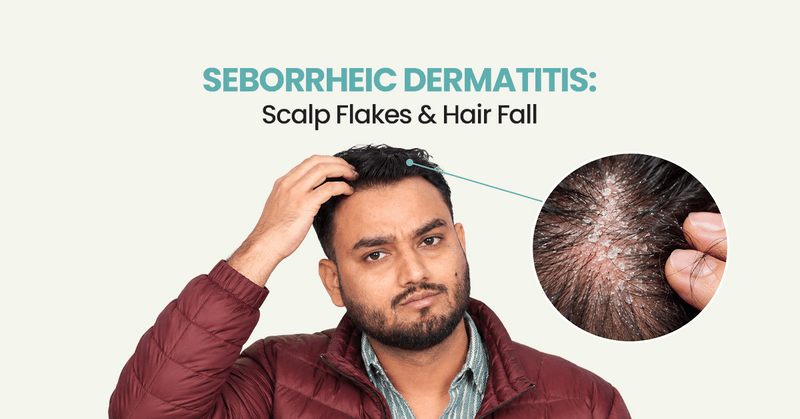
The quickest tell is the flake itself, and this is where the oil question earns its keep. Seborrheic dermatitis is the greasy one: thinner, yellowish, oily-looking flakes. Psoriasis is the dry one, with thicker scales and a silvery sheen. Location helps too.
Psoriasis often creeps past the hairline and shows up on the elbows, knees or lower back as well, and it can leave tiny pits in the nails. Seborrheic dermatitis usually keeps to the scalp and face.
| What to check | Scalp psoriasis | Seborrheic dermatitis |
|---|---|---|
| The scale | Thick, dry, silvery-white | Thinner, yellowish, greasy-looking |
| Where it shows | Spreads past the hairline; also on elbows, knees, lower back; can pit the nails | Usually stays on the scalp and face |
| How it feels | Sore or tender; bleeds if scratched or picked | Itches or burns |
| What sits behind it | Immune system overreacting; runs in families | Linked to oily skin, stress and poor sleep |
It is possible to have both at once, an overlap sometimes called sebopsoriasis, which is one more reason guessing at home falls short.
Where the picture is oily and dandruff-like, URoots Xtend KZ Scalp Clarifying Shampoo is a medicated anti-dandruff cleanse that can keep a flaky scalp clean. That is help for the greasy, seborrheic side. It is not a psoriasis treatment.
So: greasy flakes that stay on your scalp point one way. Dry, thick, silvery scale that marches past your hairline points the other. A doctor makes the call for certain.
Scalp Psoriasis Treatment: What a Doctor Actually Prescribes
Hair gets in the way. Creams are thick, and working them down to the skin through a full head of hair is genuinely hard, which is part of why this is a doctor's job rather than a guessing game. No shampoo or cream promises a set outcome here.
Topical medicines for scalp psoriasis
Most flares start with something applied straight to the scalp. Steroid lotions and foams calm the inflammation and the itch. Vitamin D creams help slow the overactive skin growth.
Salicylic acid softens and lifts the scale, and coal or wood tar slows the build-up while easing itching, though tar can stain clothes and towels. These are prescription and pharmacy-grade options. URoots does not sell them; they come from your doctor.
Medicated shampoos for scalp psoriasis
The psoriasis-specific washes carry salicylic acid or coal tar, and the right one depends on your scalp, so ask a doctor which to reach for. Where an oily, seborrheic layer overlaps the psoriasis, Knix KZ Medicated Shampoo, a stronger medicated anti-dandruff cleanse, may be advised under medical guidance. Use it as your doctor directs. It targets the flaky, oily overlap, not the psoriasis itself.
For stubborn or widespread cases, doctors step up to light therapy, or to tablets and injections that calm the immune system across the whole body. That is a supervised path, well outside anything to try on your own.
Home Remedies For Scalp Psoriasis That Protect Your Hair
Good home care buys you real comfort and shields your hair through a flare. It does not replace the treatment your doctor prescribes, and it is worth being clear-eyed about that from the start.
- Keep your hands off the scales: Do not scratch or pick, and trim your nails short so you do less damage on the days the itch wins.
- Loosen, never scrape: Soften the scale first, then gently comb it out. Prising it off by force takes hair with it.
- Wash gentle and lukewarm: Skip scalding bucket baths and go easy on the scalp, since heat and hard rubbing leave the skin drier.
- Condition every single wash: Medicated shampoos dry the hair, so follow with conditioner to stop strands turning brittle.
- Let it air-dry: Park the blow-dryer while the scalp is already dry from the flare or the treatment.
- Treat the scalp, not just the hair: Whatever your doctor gives you belongs on the skin, worked down to where the plaques actually sit.
- Cover up in strong sun: A bad sunburn can spark a flare, so a hat or dupatta helps on bright days.
- Bring the stress down: Stress sets off flares and feeds shedding, so guard your sleep and find a way to switch off.
The URoots Daily Hydrating Shampoo with aloe vera works as a mild everyday cleanse that keeps the whole routine soft. Before a wash, a light massage with the Pure Scalp Ayurvedic Nourishing Oil can ease that tight, dry-scalp feeling and help you work loose flakes out.
On the stress side, calming support such as Calm Mind Stress Relief Supplement or the Health Rise Hair Growth Capsules with Ayurvedic Botanical Formula can sit alongside the rest. One firm caution: keep the scalp roller away from skin that is flaring, cracked or sore. A derma roller is not for an inflamed or broken scalp.
When To See A Doctor
Some signs mean it is time to stop experimenting with the shampoo aisle. If over-the-counter anti-dandruff washes are not helping, the flakes are white or grey and stubborn, and the scalp stays itchy, get it looked at. Early treatment settles a flare quickly, before it turns severe, and that is also how you spare the hair.
If hair fall keeps going even after the psoriasis has calmed, that is a reason to get checked, because something else may be adding to it. And here is the line worth remembering with any hair product: no cream, shampoo or supplement is a fix or a promised result.
A dermatologist or trichologist first confirms what you are actually dealing with. The whole link between scalp psoriasis and hair loss gets easier to manage once you know exactly what you are treating.
Not sure if it is psoriasis, dandruff or the start of hair loss? Take a quick URoots hair test and get a clear read before you treat anything.
Frequently Asked Questions
Will hair loss from scalp psoriasis grow back?
In most cases, yes. The hair fall is temporary, and hair returns once the psoriasis is treated and under control.
Is it psoriasis or just dandruff?
Dandruff and the greasy flaking of a seborrheic scalp tend to be softer and stay put on the scalp. Psoriasis scale is thicker, drier, silvery, and can spread past the hairline. A doctor can tell them apart.
Does scalp psoriasis always cause hair loss?
No. It can lead to hair fall, mostly when the scalp gets scratched or the scales are picked. Plenty of flares pass without any shedding at all.
Does stress make scalp psoriasis and hair loss worse?
It can. Stress is a known trigger for flares, and a flare feeds the shedding, so the two push on each other. Guarding your sleep and finding a way to switch off is part of managing both.
How do I stop scratching from thinning my hair?
Keep your nails trimmed so you do less harm on the days the itch wins. When you have to touch the scalp, press with the soft pad of a finger instead of digging in with a nail. Leave the scales where they are, because prising them off takes hair with them.
Can scalp psoriasis show up anywhere other than my head?
Yes. It often appears on the elbows, knees or lower back too, and it can leave tiny pits in the nails. A dry, scaly patch elsewhere on your body alongside a flaky scalp is a strong hint that this is psoriasis and not plain dandruff.
References
- MedlinePlus. Psoriasis [Internet]. Bethesda (MD): National Library of Medicine (US); [updated 2019 Feb 20; cited 2026 Sep 23].
- World Health Organization. Global report on psoriasis [Internet]. Geneva: World Health Organization; 2016 [cited 2026 Sep 23].
- Fletcher J. Scalp psoriasis and hair loss: what is the connection? [Internet]. London: Medical News Today; [updated 2025 Oct 1; cited 2026 Sep 23].
- Cleveland Clinic. Experiencing scalp psoriasis? Learn how to treat and reduce hair loss [Internet]. Cleveland (OH): Cleveland Clinic; 2024 [cited 2026 Sep 23].
- Mayo Clinic. Scalp psoriasis vs. seborrheic dermatitis: what's the difference? [Internet]. Rochester (MN): Mayo Foundation for Medical Education and Research; [cited 2026 Sep 23].
- Pietrangelo A. Psoriasis vs. seborrheic dermatitis: what's the difference? [Internet]. San Francisco (CA): Healthline Media; [updated 2024 May 21; cited 2026 Sep 23].
Know Your Hair Fall Before It Worsens
Identify early hairfall signs with personalised expert-backed recovery guidance.
 Take 2 minutes
hair test. (opens in a new tab)